A hand wash station fits when there is soap-and-water work happening: food vendors plating for a crowd, drywall and concrete crews, oilfield and farm operations, livestock handling, or any Lubbock site where an…
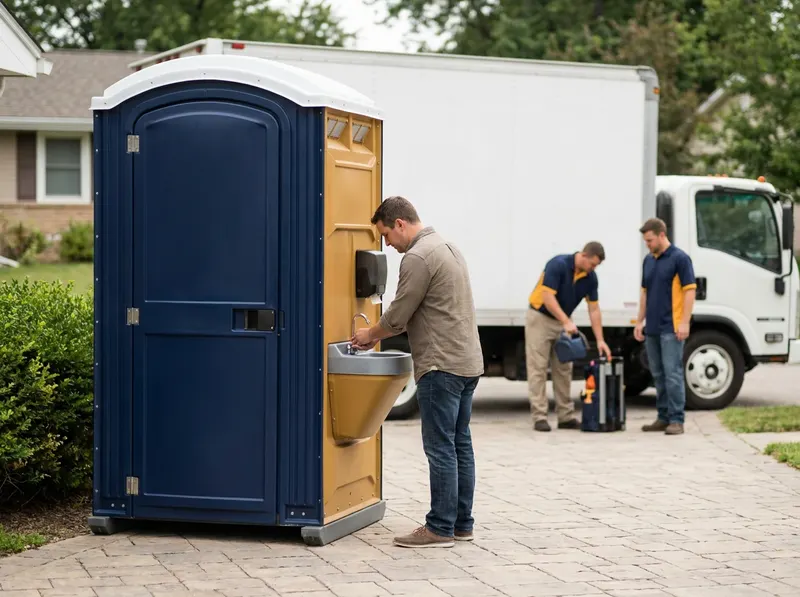
A hand wash station fits when there is soap-and-water work happening: food vendors plating for a crowd, drywall and concrete crews, oilfield and farm operations, livestock handling, or any Lubbock site where an inspector or venue coordinator expects real washing rather than a sanitizer pump. Sanitizer stands are the lighter alternative — cheaper, smaller, no tanks to fill — and they are the right call for a dry office trailer, a ticket gate, or a wedding where guests are not touching food service. The trade-off is capacity and function: sanitizer does nothing about grease, caliche dust or cotton lint on hands, and it runs out fast in a crowd. Water sinks cost more and need refilling; sanitizer costs less and does less. Most sites end up with both — sinks near food and near the toilets, sanitizer stands at entrances.
For planning, a common rule of thumb is one two-basin sink per 10–15 workers on a jobsite, and for events roughly one sink per two to four portable toilets plus a dedicated station at the food-truck or catering line. A 200-guest reception in Vintage Township with three trucks parked on the green is a different order than a 12-man framing crew in Bell Farms, and we will say so on the phone instead of quoting one unit for both. If you are still sizing the whole order, the homepage covers portable toilet counts and full site plans — hand wash stations are meant to sit inside that plan, not replace it.
West Texas details change how these units get placed. Wind is the first one: an empty foot-pump sink is light, so we set stations on firm level ground, out of the funnel between buildings, and weighted or staked where the site allows — the open lots around Mackenzie Park and the caliche pads on the north and east edges of Lubbock County get the worst of it. Heat is the second: fresh-water tanks drain faster in July, so a heavily used sink on a summer jobsite usually needs more than one refill a week. Freezing is the third: from roughly December through February, water lines and pumps in an unheated unit are at risk overnight, and we will talk through draining, seasonal swaps to sanitizer stands, or repositioning against a windbreak before you sign for a winter month.
Access matters more for sinks than for toilets because a full unit is heavy and sloshes. Alley placements behind older homes in Tech Terrace and South Overton, tight courtyard drops near North Overton apartment builds, and narrow shared drives in Arnett Benson, Guadalupe and Chatman Hill all work — we just need to know before the truck is loaded so the right vehicle comes. Neighborhood park events at Maxey Park and gatherings in Melonie Park usually mean a set-back placement away from the crowd path with a clear line for the service truck to return. Tell us where the truck can pull within about 15 feet of the spot, and where the unit should not sit — in front of a wedding backdrop, in a fire lane, or in the way of a concrete pour.
On service: refills and greywater pumping are scheduled, not improvised. Weekly is standard for construction rentals; heavy-use events get a mid-event refill built into the quote if the guest count and hours call for it. Delivered on time. Serviced on schedule. If a station gets knocked over on a windy Saturday or a crew burns through the tank a day early, call (806) 450-9912 and we will tell you honestly when a truck can be there rather than promising an hour we cannot hold.
Every job gets a firm, written price after a free on-site visit.
Tell us about your hand wash station rental job in Lubbock and we'll send a clear, written quote — usually the same day.
 MetroFlow Potty Exparts