The first decision on an ag site is whether the unit sits central or sits where the work is. One unit parked at the gin office or shop yard is cheaper and easier to service, and that is the right call when everybody…
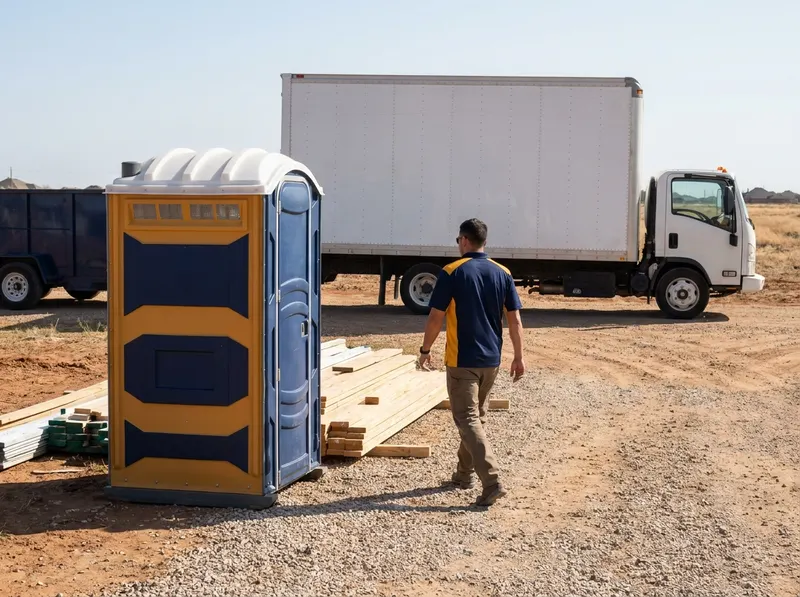
The first decision on an ag site is whether the unit sits central or sits where the work is. One unit parked at the gin office or shop yard is cheaper and easier to service, and that is the right call when everybody funnels back through the yard anyway. Units staged out at the turn rows cost more per stop but stop a crew from burning fifteen minutes each way walking or driving back — and on a stripper crew or a module-truck rotation, that time is real. Our default recommendation is one unit at the yard plus one at the active field when the working distance is more than a few hundred yards. If the field moves weekly, say so up front; relocating a unit between fields is a scheduled move, not something a driver improvises on a service stop.
Access is the part that decides everything else. Our service truck has to get within roughly a truck length of the unit to pump it, so a placement that a pickup can reach is not automatically a placement we can service. Caliche and packed dirt hold up fine in dry weather; the problems are the low spots and playa edges that stay soft for days after a rain, plus narrow gates, cattle guards, and low power or irrigation lines over a two-track. Tell us about locked gates and codes before delivery day — a driver sitting at a closed gate is the most common reason a first delivery slips. Around the north and west edges of town where subdivisions like Bell Farms give way to section roads, and out along the farm-to-market roads toward Shallowater, Wolfforth, Idalou, New Deal, Slaton, Abernathy and Ropesville, we plan placements off the nearest paved road so the unit is reachable without driving a heavy truck down a soft turn row.
Wind and dust drive the setup details in West Texas, and they are worth two minutes of planning. Units on open ground get staked or strapped, and the door faces away from the prevailing southwest wind so it does not catch and slam or blow a worker's hands off it. We keep units out of the traffic lane at gin yards — module trucks, boll buggies and tractor-trailers need the turning room, and a unit clipped by a trailer is a mess nobody wants at 2 a.m. during a run. Heat and blowing dust also shorten how long a unit stays acceptable: at the same headcount, a unit in July sun or in a dusty gin yard needs service more often than the same unit in March.
Cotton season is when this service gets tight. Gin yards from roughly late August into January run long shifts with headcounts that jump well above a normal farm crew, and that is exactly when weekly service stops being enough. Twice-weekly service is the honest answer for most gin yards during a run, and we would rather quote it than let a unit go foul and have the crew stop using it. Book harvest placements early — the same weeks are busy for every supplier in Lubbock County. If a unit fills faster than expected or gets knocked over on a heavy day, call (806) 450-9912 and we will schedule the extra stop rather than leaving it until the next routine service day.
Pricing on ag work is structured the same way as our city work, so nothing shows up on the invoice as a surprise: rental covers the unit for the period, the delivery and pickup are stated, and each service visit is a defined stop. Distance past the Lubbock County core can add a trip charge, and we quote that number before delivery rather than after. For unit counts by crew size and days, start on the Lubbock portable toilet homepage and then call with your acres, gate and start date.
Every job gets a firm, written price after a free on-site visit.
Tell us about your farm, gin and field-road unit placement job in Lubbock and we'll send a clear, written quote — usually the same day.
 MetroFlow Potty Exparts