The decision on a jobsite is almost never which unit — it is how many, and where they sit. A four-man framing crew on an infill lot in Arnett Benson or Guadalupe runs fine on one standard unit serviced weekly. A 25-man…
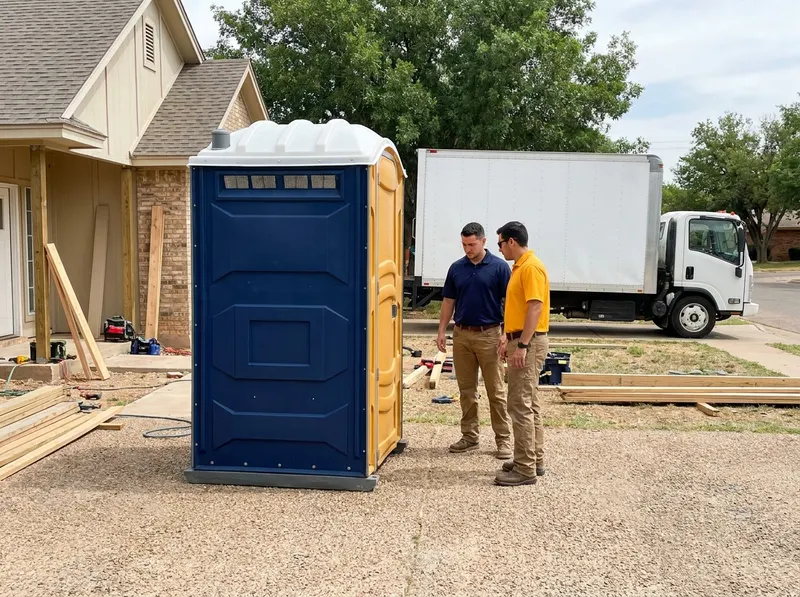
The decision on a jobsite is almost never which unit — it is how many, and where they sit. A four-man framing crew on an infill lot in Arnett Benson or Guadalupe runs fine on one standard unit serviced weekly. A 25-man concrete and MEP push on a Vintage Township or Bell Farms build, or a multi-trade stretch on the North Overton redevelopment blocks near Texas Tech, needs two to three units spread across the site plus a second service visit in the week, because one unit shared by three trades gets ugly by Thursday no matter how well it was serviced Monday. The trade-off is straightforward: a second unit costs less per month than the productivity you lose when men walk off site to find a restroom, but there is no reason to pay for four units on a slab that only ever has six people on it. Give us the headcount and the schedule and we will size it honestly, including dropping a unit off the rental when the trade count falls off.
Access is the other thing worth settling before delivery day. Our service truck needs a path it can reach and back out of — roughly 12 feet of clearance and no soft ground it will sink into. On Tech Terrace remodels the alley is usually the answer, and we will confirm the alley is drivable rather than blocked by a fence or a dumpster; on Maxey Park and Melonie Park re-roof and pool jobs the unit typically sits in the drive apron or at the curb, which requires a placement your homeowner and the city will accept. Out on caliche pads and field roads in Lubbock County, and on jobs toward Shallowater, Idalou, Wolfforth and New Deal, we ask about gate widths, cattle guards and whether the road holds up after a rain, because a truck that cannot reach the unit is a service visit that did not happen.
West Texas conditions shape how a jobsite unit is set. Wind coming across the Caprock will move an unanchored unit on an open pad, so units get staked or ballasted at placement and set with the door out of the prevailing southwest push wherever the site allows. Blowing dust and summer heat both work against odor control, which is why we favor a shaded or lee-side spot near the crew trailer instead of the middle of an open slab, and why heavy-use sites are better served twice a week from the start than caught up later. Demand tightens during cotton harvest and around the fall stretch when farm, oilfield and construction bookings overlap, so long jobs are easier to hold on a route when they are booked ahead rather than week to week.
What you get from us is the schedule, in writing. Your site sits on a named service day, the driver knows the placement, and the same number quoted at booking is what the invoice reflects — delivery, weekly service and pickup accounted for up front, no surprise pickup fee at close-out. If a unit gets knocked over on a windy afternoon, buried by a stockpile, or fills faster than expected after a heavy day, call (806) 450-9912 and we will set it right or schedule an added service run. Delivered on time. Serviced on schedule. More on our full Lubbock lineup, including event and residential rentals, is on our homepage.
Every job gets a firm, written price after a free on-site visit.
Tell us about your construction jobsite portable toilet rental job in Lubbock and we'll send a clear, written quote — usually the same day.
 MetroFlow Potty Exparts